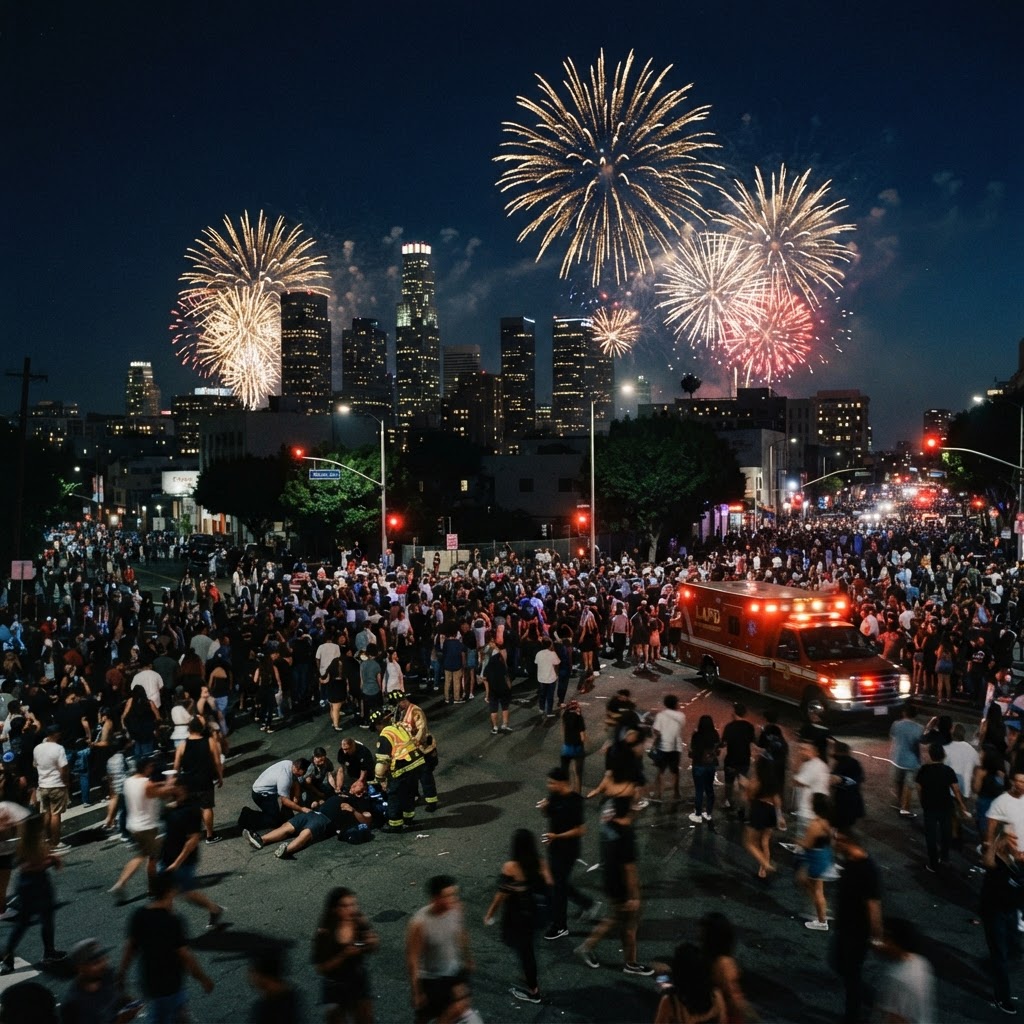
You can often seek compensation for a Fourth of July injury if someone else's negligence caused it, even though holiday activities like fireworks carry some risk. California's assumption of risk doctrine only bars claims for dangers that are truly inherent to an activity when everyone acted properly. Illegal or defective fireworks, unsafe property, careless hosts and impaired drivers can all create liability.
Why July 4th Sends So Many People to the ER
Independence Day brings fireworks, barbecues, pool parties, parades and concerts, and it is one of the busiest times of the year for emergency rooms. Large crowds, explosives, water, alcohol and heavy traffic combine in ways that make accidents more likely. According to the U.S. Consumer Product Safety Commission, there were 15 fireworks-related deaths and about 13,000 fireworks injuries in a single recent year.
Common holiday injuries include:
- Fireworks burns, blast injuries and eye injuries
- Car crashes involving impaired or distracted drivers
- Slip and falls at crowded celebrations
- Swimming pool accidents and boating injuries
- Dog bites at busy gatherings
- Injuries from defective fireworks
- Injuries caused by hazards at private homes or businesses
Some of these are simply bad luck. Many others happen because someone did not act responsibly, and that difference decides whether you have a claim.
Does Celebrating Mean You Accept All the Risk?
One of the most common misconceptions is that joining in holiday activities means you cannot bring an injury claim. The legal concept behind that idea is called assumption of risk, and it is much narrower than people think.
Our founding attorney, Shawn Rokni, who previously worked as a senior insurance defense attorney and in-house counsel for a major auto insurer, puts it this way: "There's a concept called assumption of risk if someone is involved in, let's say, setting off fireworks, that concept is not always dispositive of liability."
In other words, taking part in an activity with known dangers does not automatically cancel out someone else's legal responsibility.
How Assumption of Risk Works
The doctrine exists so people cannot sue over dangers that are simply part of an activity. A basketball player may roll an ankle. A baseball fan may be hit by a foul ball. A climber may fall. Those are inherent risks. But they do not give anyone permission to act carelessly.
Shawn explains the key qualification: "When you engage in an activity that has certain risks of harm embedded in the activity, as long as they did everything correctly, they abided by all the regulations, and then there's just this inherent risk, then assumption of risk might potentially block the claim."
The protection depends on everyone else having acted responsibly and followed the law.
When the Doctrine Does Not Apply
Many holiday injuries happen because someone ignored safety rules, for example by:
- Using or selling illegal fireworks
- Selling defective fireworks
- Running an unsafe event
- Failing to supervise dangerous activities
- Ignoring local fire rules
- Allowing hazardous conditions on a property
"If someone broke some regulations, did something wrong, and then someone got hurt, it doesn't matter that there was an assumption of risk... they still might have a claim," Shawn says. California law generally expects people to take reasonable care to keep others safe. When they do not, they can be financially responsible for the harm.
A Simple Example
Shawn uses a sports comparison: "If you're going up for a layup and the other guy comes and punches you in the face, that's not part of the game. That's not an inherent risk. That's an unreasonable, malicious, purposeful assault. So then that assumption of risk doesn't protect the assaulting party anymore. They're still going to be liable."
The same logic applies on the Fourth. You may accept that fireworks are loud and crowds are busy. You do not accept someone else's recklessness, a defective product or a violation of safety rules.
Fireworks Do Not Excuse Negligence
Fireworks cause a large share of holiday injuries, and many people believe that by watching or joining in they accept any outcome. That is not how the law works. "The fireworks still need to be... legal and abiding by regulations," Shawn says. Whoever is involved, safety obligations still apply:
- Manufacturers must make reasonably safe products.
- Sellers must follow the rules that govern fireworks sales.
- Property owners must keep their premises reasonably safe.
- Event organizers must take appropriate precautions for guests.
Illegal and Defective Fireworks
Some of the worst injuries involve fireworks that are illegal, badly made or used irresponsibly. "If somebody's providing those fireworks and they're illegal, and the injured person doesn't know about the legality of it... they could be liable," Shawn explains.
Picture a neighborhood party in one of the parts of Los Angeles County where certain fireworks may be legally used during a limited window around the holiday. The host buys illegal aerial fireworks. Guests assume everything is safe. One device explodes unexpectedly and seriously injures someone. That injured guest may have a claim, because the danger went well beyond the ordinary risks of a July 4th celebration.
The same can be true when fireworks malfunction, explode early or fail to meet safety standards. That is not a normal holiday mishap; it may be negligence or a defective product claim. If you are hurt, try to keep the remains of the device and its packaging.
Property Owners Still Have Duties
Many celebrations happen at homes, apartment complexes, parks, bars, restaurants and event venues. Owners and those in control of a property must keep it reasonably safe for visitors. Depending on the facts, they may be liable for injuries caused by:
- Poor lighting
- Broken stairs or walkways
- Pool hazards or lack of supervision
- Unsecured fireworks launch areas
- Inadequate crowd control
- Dangerous electrical setups
- Known hazards that were never fixed
A holiday does not excuse unsafe conditions. Our overview of premises liability explains how these claims work, and our page on premises liability cases covers the types of property injuries we handle.
Holiday Traffic and Impaired Drivers
Not every July 4th injury involves fireworks. Roads around Los Angeles fill with people heading to beaches, parks and parties, and some drivers get behind the wheel after drinking. Assumption of risk has nothing to do with these crashes: every driver owes others a duty of care, and an impaired or distracted driver who causes a collision can be held responsible. In a drunk driving case, evidence such as the police investigation, blood alcohol results and witness accounts can be important, and the driver may also face a claim for punitive damages in some cases. Learn more about DUI accident claims.
When Children Are Hurt
Children are especially vulnerable around fireworks, pools and crowds, and the law generally expects adults to take extra care where kids are present. A child cannot be expected to appreciate risks the way an adult would, which can limit arguments that the child assumed the risk or was careless. Hosts who leave fireworks within reach, fail to supervise a pool or let children stand too close to a launch area may be responsible if something goes wrong. If your child was hurt, get medical care first, then preserve evidence and write down who was supervising and what happened.
Who Might Be Responsible?
Depending on the facts, liability could fall on:
- A property owner or host who failed to keep the premises safe
- An event organizer who ignored safety requirements
- A fireworks manufacturer that made a defective product
- A seller that sold fireworks illegally
- A person who misused fireworks or acted recklessly
- A drunk or distracted driver
- A business that created a hazard during a holiday event
Sorting this out takes investigation. Photos, witness statements, surveillance video and incident reports all help show who was responsible. In many cases, a claim against a homeowner or business is actually paid by their insurance.
Partial Fault Does Not End Your Claim
California uses comparative negligence, so more than one person can share responsibility for an accident. If you were partly at fault, your compensation is reduced by your percentage of fault, not wiped out. Insurers may argue that you accepted the risks of the holiday or that you were careless, but those arguments are often not supported by the facts. As Shawn notes, injured people "might still have a claim depending on what defects or irregular risks of harm there were, that weren't inherent to the activity."
What to Do After a July 4th Injury
- Get medical care right away, especially for burns and eye injuries.
- Photograph the scene, the fireworks or hazard and your injuries.
- Keep any fireworks remains, packaging and receipts.
- Get the names and phone numbers of the host and witnesses.
- Report the incident to police, the venue or property management as appropriate.
- Avoid posting about the incident on social media.
- Talk to a lawyer before giving a recorded statement to any insurer.
The Insider View
Holiday injury claims often turn on one question: was the danger inherent to the activity, or did someone create an unnecessary risk? Insurers frequently raise assumption of risk early because it can discourage injured people from pursuing a claim at all. As Shawn puts it, "Assumption of risk is... a doctrine that comes up in a defense, but it's not bulletproof... They have to reasonably try and make people safe." Whether it protects a defendant, he adds, "depends on how either grossly negligent or intentional their conduct was." We know how insurers use this argument, and we build cases with the evidence and law needed to answer it.
Do Not Assume You Have No Case
Getting hurt during a Fourth of July celebration does not mean you gave up your rights. If someone else's negligence contributed to your injury, you may be entitled to compensation for medical bills, lost income, pain and suffering and other losses. Holiday gatherings can also lead to animal attacks; if that happened to you, see what to do after a dog bite in Los Angeles. To talk through your situation, call 424-INSIDER or request a free consultation. You pay no attorney's fee unless we recover compensation for you.