Yes, you can still recover compensation after a collision with an uninsured driver in California. The most common source is your own uninsured motorist (UM) coverage, which steps into the shoes of the insurance the other driver should have had. Other options include MedPay, health insurance, collision coverage for your car, a lawsuit against the driver personally, and claims against other responsible parties such as an employer or vehicle owner.
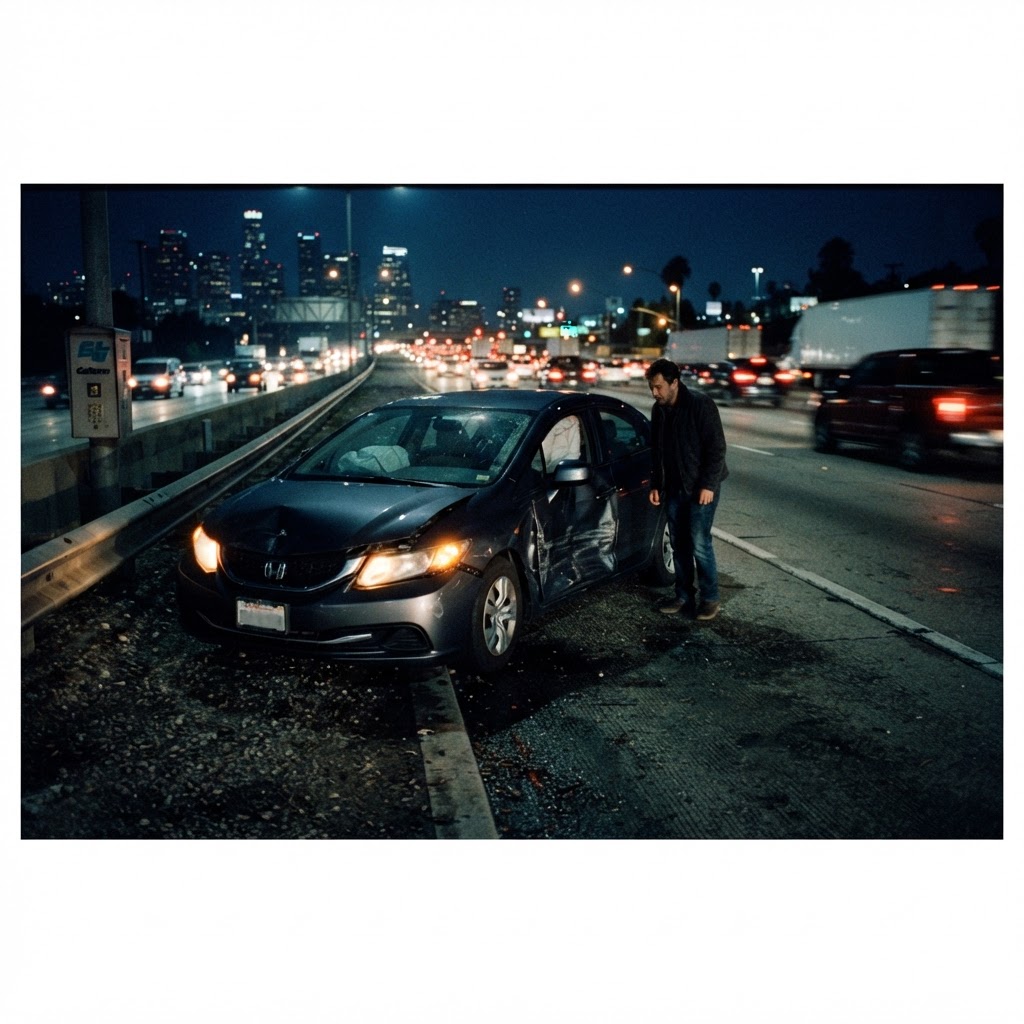
Picture it: you're driving carefully on the 405 or the 110 when another driver slams into you. Your car is damaged, you're hurt, and then you learn the person who caused it has no insurance. It's easy to assume that's the end of the road. It usually isn't. These cases take more work than a typical claim, but acting quickly, preserving evidence, and knowing where to look can make the difference.
What Counts as an Uninsured Driver Collision?
An uninsured driver collision is a crash caused by someone who doesn't carry the liability insurance California requires. Under DMV insurance requirements, the minimum limits are:
- $30,000 for injury or death to one person
- $60,000 for injury or death to more than one person
- $15,000 for property damage
Some drivers let their policies lapse because they can't keep up with premiums; others never buy insurance at all. When one of them causes a crash, the financial burden falls on the injured person unless another source of payment can be found.
Uninsured drivers cause every type of crash: rear-end and head-on collisions, side impacts, pileups, and crashes involving motorcyclists, cyclists, and pedestrians. The missing insurance changes where the money comes from. It doesn't erase your legal rights.
How Common Are Uninsured Drivers in California?
More common than most people think. According to a study by the Insurance Research Council, about 20.4% of California drivers were uninsured in 2023, or roughly one in five. Rising premiums, economic strain, and cancelled policies all contribute. In practical terms, every time you drive in Los Angeles, there is a real chance that the driver who hits you won't have coverage.
Where Compensation Can Come From
Depending on your situation, possible sources include:
- Your uninsured motorist bodily injury (UMBI) coverage
- Medical Payments (MedPay) coverage on your auto policy
- Your health insurance
- Your collision coverage, for vehicle damage
- A lawsuit against the at-fault driver personally
- Claims against other people or companies who share responsibility
- Other policies that may apply, such as a policy covering the vehicle's owner
No two cases are alike, and a careful review of every possible source should come before anyone concludes that compensation isn't available.
Why Uninsured Motorist Coverage Matters So Much
Liability insurance protects other people when you cause a crash. Uninsured motorist coverage protects you when someone without insurance injures you. If an uninsured driver is at fault, your own insurer essentially takes the place of the insurer the other driver should have had.
Depending on your policy, UM coverage can pay for:
- Emergency care, hospitalization, and surgery
- Physical therapy and future medical treatment
- Lost income and reduced earning capacity
- Pain and suffering
- Permanent disability
Most people add UM coverage when buying a policy without giving it much thought. After a crash with an uninsured driver, it often becomes the most important coverage they have.
How a UM Claim Typically Unfolds
While every insurer handles claims a little differently, a UM claim usually moves through several stages:
- Notice. You report the crash to your insurer and tell them the other driver appears to be uninsured.
- Coverage confirmation. Your insurer checks your policy limits and investigates whether the other driver truly had no valid insurance.
- Treatment and documentation. You complete medical care while records, bills, and proof of lost income are gathered.
- Demand. Once the full extent of your injuries is known, a demand package is sent to the insurer laying out your damages.
- Negotiation. The insurer evaluates the claim and makes an offer, which often starts low.
- Arbitration if needed. If you and your insurer can't agree on fault or value, California UM disputes are generally resolved through arbitration rather than a jury trial. Arbitration is a formal proceeding with evidence and testimony, and preparation matters.
Your UM recovery is capped by the limits you purchased. If your limits are low and your injuries are serious, it becomes even more important to look for other responsible parties and other available coverage.
What About Hit-and-Run Drivers?
A driver who flees the scene is often treated as an uninsured motorist for coverage purposes, because there is no identified policy to claim against. Coverage for hit-and-run injuries depends on the facts and your policy terms, so report the crash to police right away and notify your insurer promptly. Our guide on what to do after a hit and run walks through the steps.
Underinsured Drivers
A related problem is the driver who has insurance, but not nearly enough. Underinsured motorist (UIM) coverage can help fill the gap when the at-fault driver's limits don't cover your losses. For example, our firm obtained a $750,000 result in a disputed freeway lane change case ($250k policy limits + $500k UIM). Every case is different, and prior results don't predict the outcome of any other matter.
Is the Other Driver Really Uninsured?
Right after a crash, adrenaline is high and the other driver may insist they're covered. That doesn't mean the policy is active. Drivers sometimes hand over:
- Expired insurance cards
- Information for a cancelled policy
- Made-up policy numbers
- Someone else's insurance information
Insurers verify policy numbers, effective dates, listed vehicles and drivers, and coverage limits before accepting or denying a claim. Lying about coverage usually creates more legal trouble for the driver, and the truth comes out. If there was no valid policy, your claim shifts to the alternative sources above. Your attorney can confirm whether coverage existed on the date of the crash.
Filing an Uninsured Motorist Claim With Your Own Insurer
Many people expect a UM claim to be easy because they're dealing with their own insurance company. It often isn't. Your insurer still has a financial interest in paying as little as possible, even after years of premiums. Once you make a UM claim, the company you've been paying may investigate you much the way the other driver's insurer would, questioning:
- Who caused the crash
- How serious your injuries are
- Whether your treatment was necessary
- Whether your injuries existed before the collision
- What your damages are really worth
Our founding attorney, Shawn Rokni, previously worked as a senior insurance defense attorney and in-house counsel for a major auto insurer, so our firm understands how carriers evaluate these claims from the inside. Casual statements, gaps in treatment, and social media posts can all be used to argue your claim is worth less. That's why many people choose to have an attorney handle communications with the insurer from the start. Our guide to insurance valuation software explains how carriers put a number on injury claims.
Can You Sue the Uninsured Driver?
Yes. An uninsured driver can be sued personally. But winning a judgment is only half of it; the other half is whether the driver has anything to collect. Some uninsured drivers own real estate, investments, business interests, or valuable property, and a lawsuit can make financial sense. Others have few collectible assets, which makes recovery difficult. An attorney can look into the driver's situation before recommending whether a lawsuit is worth pursuing.
Could Someone Else Be Responsible?
One of the biggest mistakes after a crash is assuming only one person can be legally responsible. Others may have contributed, and they may have insurance:
- An employer whose employee was driving for work
- A trucking or delivery company
- A vehicle owner who negligently lent the car to an unfit driver
- A government agency responsible for a dangerous road condition
- A manufacturer of a defective vehicle part
A thorough investigation can uncover coverage that wasn't obvious at the scene.
What Damages You Can Recover
If a source of payment is available, you can generally pursue the same categories of damages as in any other injury case.
Medical Expenses
Ambulance transport, emergency care, hospital stays, surgery, follow-up visits with other physicians, imaging, prescriptions, rehabilitation, and future care. Serious injuries can require years of treatment, so estimating future costs accurately matters.
Lost Income
Lost wages, missed bonuses and commissions, lost self-employment income, and reduced future earning capacity. In serious cases, financial and vocational professionals may help measure the long-term effect on your career.
Pain and Suffering
Not every loss comes with a receipt. Non-economic damages can include physical pain, emotional distress, anxiety, depression, loss of enjoyment of life, scarring, and permanent disability. These effects often last long after treatment ends.
Property Damage
In a car-dependent city like Los Angeles, getting your vehicle fixed is urgent. Collision coverage can pay for repairs regardless of fault. Without it, recovering repair costs may require pursuing the driver directly or finding another responsible party. Damaged personal items, such as electronics, child car seats, or a bicycle, can also be part of the claim. Our guide to property damage after a California car accident covers the options in detail.
What to Do After a Crash With an Uninsured Driver
- Call 911 and report the crash.
- Get medical attention right away, even if your injuries seem minor.
- Get the other driver's name, license, plate number, and any insurance information they claim to have.
- Photograph the vehicles, the roadway, your injuries, and the surrounding area.
- Get contact information from witnesses.
- Notify your own insurance company promptly.
- Keep copies of medical records, bills, and repair estimates.
- Talk to a personal injury attorney before accepting any settlement.
Don't Put Off Medical Care
Health care in California is expensive, and some people hesitate to get treatment when the other driver has no insurance. Delaying care puts both your health and your claim at risk. Prompt treatment documents your injuries, links them clearly to the crash, catches problems that aren't obvious right away, and shows you took your recovery seriously. Concussions, spinal injuries, and internal injuries often don't produce symptoms immediately.
Common Misconceptions
- "No insurance means no case." Not necessarily. Your UM coverage or another policy may pay.
- "I have to take whatever my insurer offers." No. You can question an offer and get legal advice before resolving your claim.
- "Only severe injuries are worth pursuing." Injuries that seem moderate can require ongoing treatment and time off work. Every case deserves its own evaluation.
- "I waited a few days to see a doctor, so I've lost my claim." Prompt care is ideal, but a short delay doesn't automatically bar recovery.
How an Attorney Can Help
Uninsured motorist cases often require more investigation than a standard car accident claim, because the obvious source of payment is missing. An attorney can:
- Review every insurance policy that might apply, including policies you may not know you're covered under, such as a household family member's policy
- Confirm whether the other driver was truly uninsured on the date of the crash
- Gather medical records, police reports, photos, and witness statements
- Calculate the full value of your damages, including future care and lost earning capacity
- Handle negotiations with your insurer so your words aren't used against you
- Represent you in UM arbitration or litigation if the claim can't be resolved fairly
That lets you focus on getting better while someone else handles the paperwork, deadlines, and negotiations.
Deadlines to Keep in Mind
For an uninsured motorist bodily injury claim, California generally gives you two years from the date of the accident to take formal action on the claim. Most policies also require you to notify your insurer as soon as practical, and some set specific windows, often between 30 and 90 days. For damage to your vehicle, you generally have three years to pursue a property damage claim. Because these deadlines vary, check your policy and get advice early.
Get Help After an Uninsured Driver Collision
Finding out the driver who hit you has no insurance can feel like a dead end, but it often isn't. Our team looks at every possible source of compensation so you can focus on healing. If you were hurt by an uninsured or underinsured driver, learn more about our car accident practice or contact Insider Accident Lawyers for a free case review. You pay no attorney's fee unless we recover compensation for you.