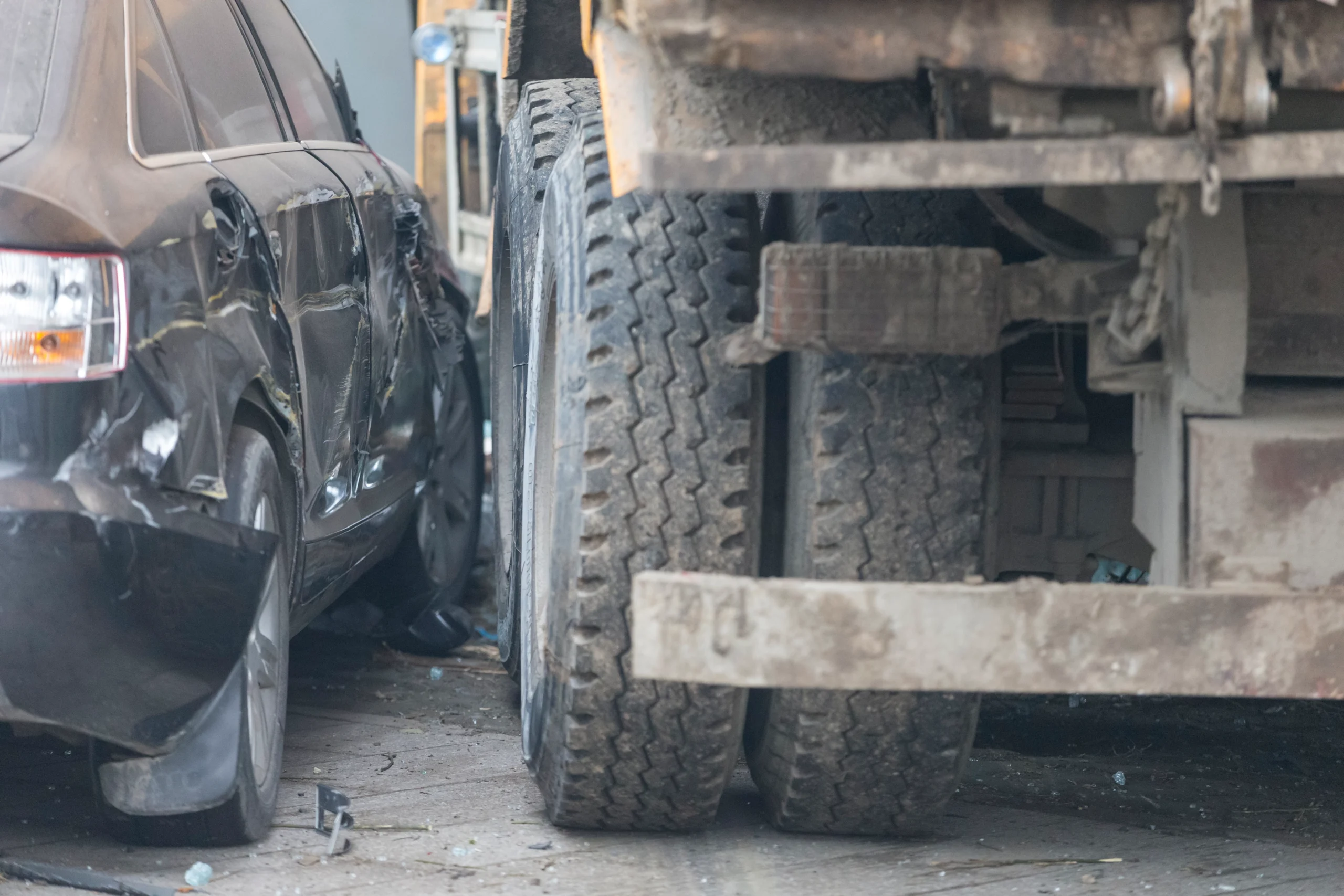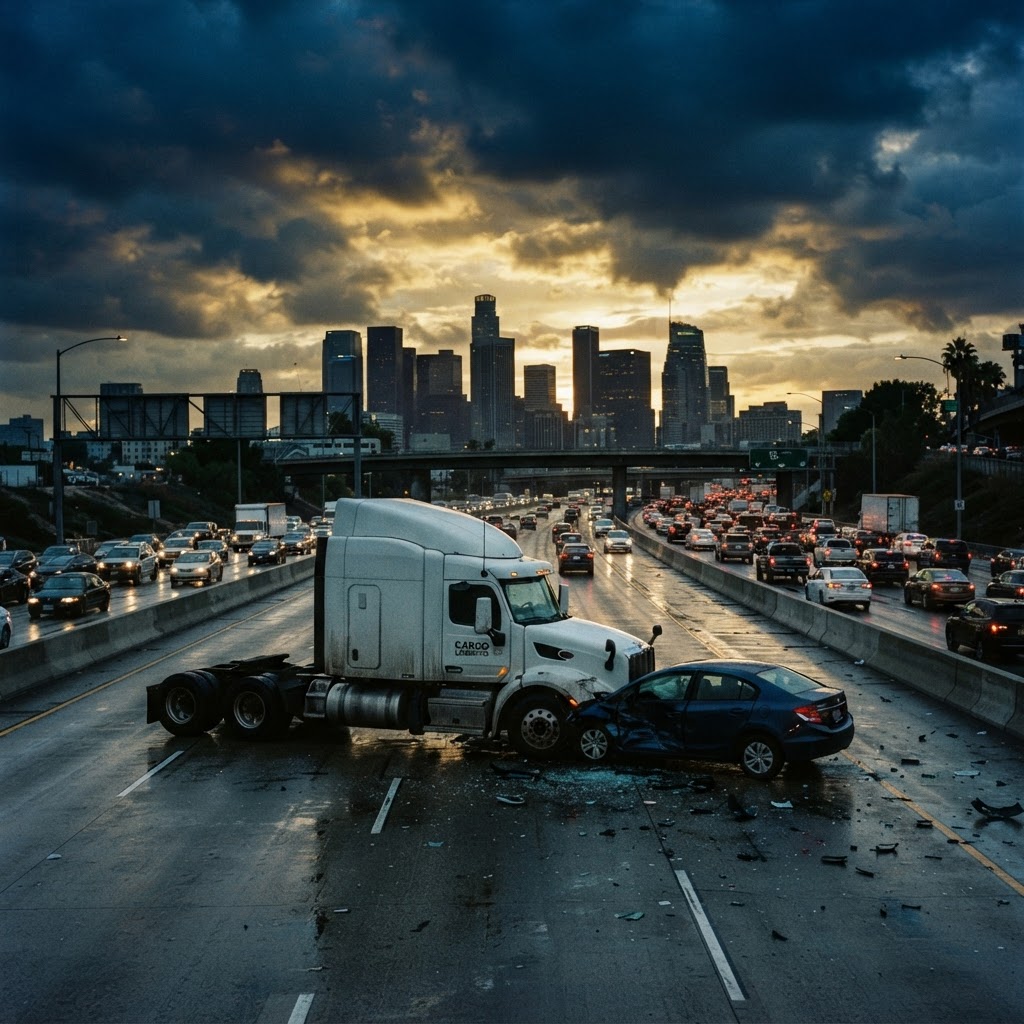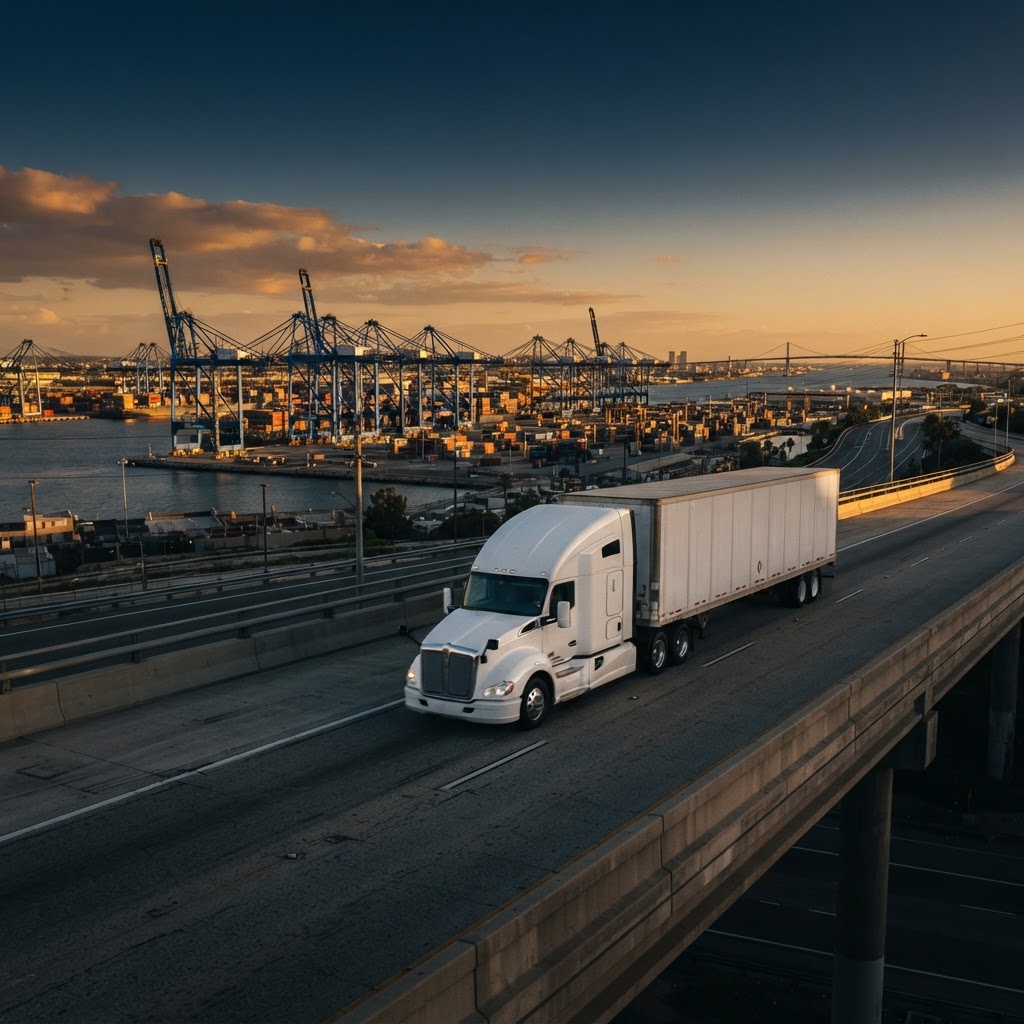
Long Beach sees so many truck accidents because it is home to one of the busiest ports in the world, and the freight that comes off the ships leaves largely by truck. Those heavy vehicles share crowded surface streets and the 710 and 405 freeways with commuters, cyclists, and pedestrians, where blind spots, wide turns, fatigue, congestion, and cargo problems turn ordinary mistakes into serious crashes. When a collision happens, the size difference means the people in the smaller vehicle usually bear the worst of it.
Anyone who lives or works in Long Beach knows the scene: rigs rolling along harbor roads, lines of trucks outside the terminals, containers stacked on chassis heading for the freeway. Trucks here aren't occasional visitors; they are part of how the city works. Understanding why that creates risk, and what the law says when something goes wrong, can help you protect yourself and your family.
A Port City Runs on Trucks
The Port of Long Beach connects Southern California to markets across the country and around the world. In 2025, it moved just under 9.8 million TEUs (twenty-foot equivalent units), a record for the port. All of that cargo has to go somewhere after it comes off a ship, and a huge share of it travels by truck.
Much of that work is called drayage: short-haul trucking that moves containers between the port, rail yards, warehouses, and distribution centers. A single container may leave a terminal on a truck, go to a warehouse, and then leave again on another truck or a train. Each leg of that journey is another trip on public roads shared with everyone else.
More trucks don't mean more careless drivers. Many commercial drivers are well-trained professionals doing a demanding job. But more trucks mean more chances for something to go wrong, and because these vehicles are so large, a routine mistake can have outsized consequences.
Streets That Serve Everyone at Once
Long Beach packs residential neighborhoods, busy commercial strips, industrial zones, and major freeways into just under 80 square miles. The roads near the port are doing exactly what they were built to do: carry freight. The trouble starts where those freight routes overlap with streets meant for everyday traffic.
The City of Long Beach publishes a High-Injury Corridors map identifying roads where collisions and injuries are significantly higher than average. It includes stretches of Atlantic Avenue, Long Beach Boulevard, Cherry Avenue, Anaheim Street, and Pacific Coast Highway, among others. None of those roads belong only to trucks. A turning tractor-trailer on one of them may be interacting with a pedestrian in the crosswalk, a cyclist coming up on the right, a motorcyclist moving between lanes, and a car trying to merge, all at the same moment.
The 710 and 405 Raise the Stakes
The 710 and 405 tie Long Beach to the rest of Los Angeles County, Orange County, and beyond, and they are critical routes for port trucks. They are also crowded, with frequent merging and sudden changes in speed.
A truck leaving the port can go from terminal traffic to dense, multi-lane freeway conditions within minutes. When traffic ahead suddenly slows, a passenger car can simply brake. A fully loaded tractor-trailer needs far more distance to stop. That is why following distance matters so much around commercial trucks, and why a small misjudgment on the freeway can become a major collision.
What Makes Trucks Different on the Road
Large Blind Spots
A useful rule of thumb: if you can't see the truck's mirrors, the driver probably can't see you. Commercial trucks have substantial blind spots in front, along both sides, and behind the trailer. A car that lingers beside the trailer may be invisible to the driver, which becomes dangerous during lane changes and at intersections.
Wide Turns and Off-Tracking
A tractor-trailer does not turn like a sedan. The trailer follows a tighter path than the cab, a phenomenon called off-tracking, and a truck making a right turn often has to swing wide first. A cyclist, pedestrian, or car positioned alongside the truck can end up in the trailer's path. Drivers of other vehicles should give trucks room near intersections, but truck drivers carry a heavy responsibility to check their surroundings before turning or changing lanes.
Stop-and-Go Congestion
Congested traffic means constant speed changes and constant interactions between vehicles. For truck drivers, long stretches of stop-and-go driving are physically and mentally draining. For everyone else, the temptation is to dart around slow-moving trucks. Sudden lane changes, aggressive passing, and tailgating all raise the risk of a crash, and when one of the vehicles is a heavy truck, the results are far more severe.
The Weight Gap
A passenger car and a loaded tractor-trailer are not evenly matched. A commercial truck can weigh many times more than a car, and that difference in mass largely decides who gets hurt. A crash that barely marks the truck can crush a smaller vehicle. Common injuries include:
- Traumatic brain injuries
- Spinal cord and back injuries
- Broken bones and crush injuries
- Internal injuries
- Severe burns
- Permanent disabilities, and in the worst cases, death
We cover these in more detail in our guide to common injuries in truck accidents.
Sharing the Road With Trucks: Practical Tips for Long Beach Drivers
You can't control how a truck driver behaves, but you can reduce your exposure to the most common hazards. These habits matter most on port-area streets and the 710:
- Don't linger beside a trailer. Pass steadily and completely, or drop back. The longer you sit alongside a truck, the longer you are likely to be in its blind spot.
- Leave room before cutting in. After passing, wait until you can see the whole front of the truck in your rearview mirror before moving over. Pulling in tight and then braking takes away the stopping distance a loaded truck needs.
- Watch for turn signals at intersections. If a truck is signaling right and drifting left, it is setting up a wide turn. Don't slip into the gap on its right.
- Keep your distance behind trucks. A trailer blocks your view of traffic ahead, and the truck driver may not see you if you are too close.
- Cyclists and pedestrians: make eye contact with the driver when you can, and never assume a turning truck has seen you.
- Put the phone away. Mixed traffic near the port changes fast, and a few seconds of distraction on your side can be just as costly.
Following these tips does not shift responsibility away from a negligent truck driver or company. Professional drivers are held to the rules of their industry, and when they break them, they and their employers can be held accountable.
The Most Common Causes of Long Beach Truck Crashes
There is rarely a single cause. Truck crashes can come from driver error, mechanical failure, cargo problems, or some combination. These are the factors that come up most often.
Driver Fatigue
Operating a heavy truck demands sustained concentration, and fatigue erodes reaction time, attention, and judgment. Federal hours-of-service rules exist to limit that risk. Under the Federal Motor Carrier Safety Administration's rules, a property-carrying driver may drive a maximum of 11 hours, and only after 10 consecutive hours off duty.
Rules on paper can't force a driver to be rested, though. Poor sleep, irregular schedules, and heavy workloads can all leave a driver exhausted. The port environment adds its own pressures: waiting for cargo, tight appointment windows, and congested streets, followed by a push onto the freeway. At highway speed, a few seconds of lost attention can be the difference between stopping in time and a rear-end crash.
Speeding and Tailgating
Stopping distance for a truck depends on speed, cargo weight, road surface, weather, and the condition of the brakes. A truck going too fast or following too closely may simply run out of room when traffic stops. The resulting rear-end collision carries enormous force, and the occupants of the car in front take the brunt of it.
Distraction
Commercial drivers are not immune to distraction from phones, navigation screens, paperwork, food, or passengers. Truck drivers have to track several lanes, multiple mirrors, and constantly changing traffic. A few seconds looking away can mean missing a car that has slid into a blind spot or a light that has turned red.
Improperly Loaded or Secured Cargo
Cargo is often part of the story. Freight has to be loaded, balanced, and secured. If it shifts in transit, the truck's handling and stability change, and in extreme cases cargo can fall onto the roadway. Federal regulations set cargo securement standards, so a thorough investigation looks at questions such as:
- Who loaded the container or trailer?
- Was the cargo properly secured and the weight evenly distributed?
- Was the truck carrying more than it should have?
- Did the load shift before the crash?
Those questions usually can't be answered by glancing at the wreckage. They require records and, often, independent analysis.
Poor Maintenance
Trucks rack up a lot of miles, so brakes, tires, steering, and lights need regular inspection and repair. A mechanical failure can turn normal traffic into an emergency in seconds. If a trucking company or maintenance provider knew about a dangerous defect and ignored it, that can become a central part of the liability case.
Port Congestion
When freight volume spikes, roads around the port fill up. Trucks queue, stop, and restart; cars try to get around them; cyclists and pedestrians try to cross. High volume doesn't make a crash inevitable, but it does demand extra care from everyone where commercial and everyday traffic mix.
Why Truck Accident Cases Are More Complicated Than Car Crashes
After a serious truck crash, families want a simple answer to "what happened?" The answer usually has to be assembled from many sources, including:
- Electronic logging device (ELD) data showing hours on duty
- The truck's event data recorder, or "black box"
- Inspection and maintenance records
- The driver's employment, licensing, and training records
- Surveillance and dashcam footage
- Witness statements
Some of this evidence is controlled by the trucking company, and some can be overwritten or discarded if no one asks for it to be preserved. Sending preservation requests early is one of the most important steps in protecting a claim.
Responsibility is also often shared. The driver may work for one company, the tractor may belong to another, and a third party may have loaded the trailer. Several insurance policies may be in play. We break down how that works in who is liable in a truck accident: the driver or the company.
The Rules Trucking Companies Are Supposed to Follow
Interstate trucking is heavily regulated. Federal rules administered by the FMCSA cover how long drivers may be on the road, how cargo must be secured, how vehicles must be inspected and maintained, and who is qualified to drive a commercial truck at all. California layers its own requirements on top of those rules, including commercial licensing standards.
These rules matter in an injury claim for two reasons. First, a violation can be strong evidence of negligence. A driver who was over his hours limit, a truck with brakes that failed inspection, or a trailer loaded beyond its rated capacity all point toward fault. Second, the rules generate paperwork: driver logs, inspection reports, maintenance records, and qualification files. That paperwork can show not only what went wrong on the day of the crash, but whether the company knew about a problem and let it continue.
Trucking companies are also responsible for the people they put behind the wheel. A company that hires a driver with a history of violations, skips required training, or sets delivery schedules that can only be met by breaking hours-of-service limits may face liability for its own conduct, separate from the driver's.
What If You Were Partly at Fault?
Insurers for trucking companies frequently argue that the other driver contributed to the crash, perhaps by lingering in a blind spot, braking suddenly, or changing lanes too close to the truck. California follows pure comparative negligence, which means you can still recover compensation even if you share some of the blame. Your recovery is reduced by your percentage of fault. Because every percentage point translates into real money, the evidence that establishes how the crash happened, including the truck's electronic data and any video, becomes especially important.
When a Long Beach Truck Accident Is Fatal
Some Long Beach truck crashes end in a death. For the family, the collision investigation is only the beginning. They may face medical bills, funeral costs, lost income, and a loss that no amount of money can repair.
California law allows certain surviving family members to bring a wrongful death claim when a person's death was caused by someone else's wrongful act or neglect. A wrongful death claim is not simply an injury case where the injured person has died; the damages and the legal issues are different. Depending on the facts, recoverable losses may include:
- Funeral and burial expenses
- Medical expenses related to the fatal injury
- Lost financial support and benefits the person would have provided
- Loss of household services
- Loss of love, companionship, comfort, and guidance
Families also have practical questions. Who controlled the truck? Was the driver on the job? Properly licensed? Was the truck maintained? Answering them matters both for understanding what happened and for identifying everyone who should be held accountable. Our firm has handled fatal truck cases, including a $1,000,000 result in a fatal collision with a commercial truck. Every case is different, and a past result is no promise of a similar outcome in another case.
What to Do After a Truck Accident in Long Beach
- Get to safety and call 911. A police report creates an official record of the crash.
- Get medical care promptly, even if you feel okay. Some serious injuries take hours or days to show symptoms.
- Document the scene if you safely can: photos of vehicles, the truck's markings and DOT number, road conditions, and injuries.
- Collect witness names and contact information.
- Be cautious with insurers. Trucking insurers often move quickly after serious crashes. Avoid recorded statements or settlement agreements until you understand your rights.
How the Trucking Insurer Sees Your Claim
Our founding attorney, Shawn Rokni, previously worked as a senior insurance defense attorney and in-house counsel for a major auto insurer. From that side of the table, the goal after a serious commercial crash is to control the evidence and the narrative early: gather the driver's account, secure the truck's data, and look for ways to shift fault onto the other driver. Families who understand that are in a better position to protect their claim. For a sense of the losses that may be recoverable, see our guide to truck accident damages in California.
Trucks Are Part of Long Beach. Serious Crashes Shouldn't Be.
The port, the cranes, and the steady flow of trucks are part of what makes Long Beach important. That doesn't mean residents should accept devastating crashes as a cost of doing business. When a driver, trucking company, or other party acts negligently and someone is badly hurt or killed, the people affected deserve answers about what happened and who is responsible.
If you or a loved one was hurt in a Long Beach truck crash, contact Insider Accident Lawyers for a free case review. Learn more about how we handle truck accident cases, or call 424-INSIDER. You pay no attorney's fee unless we recover compensation for you.